

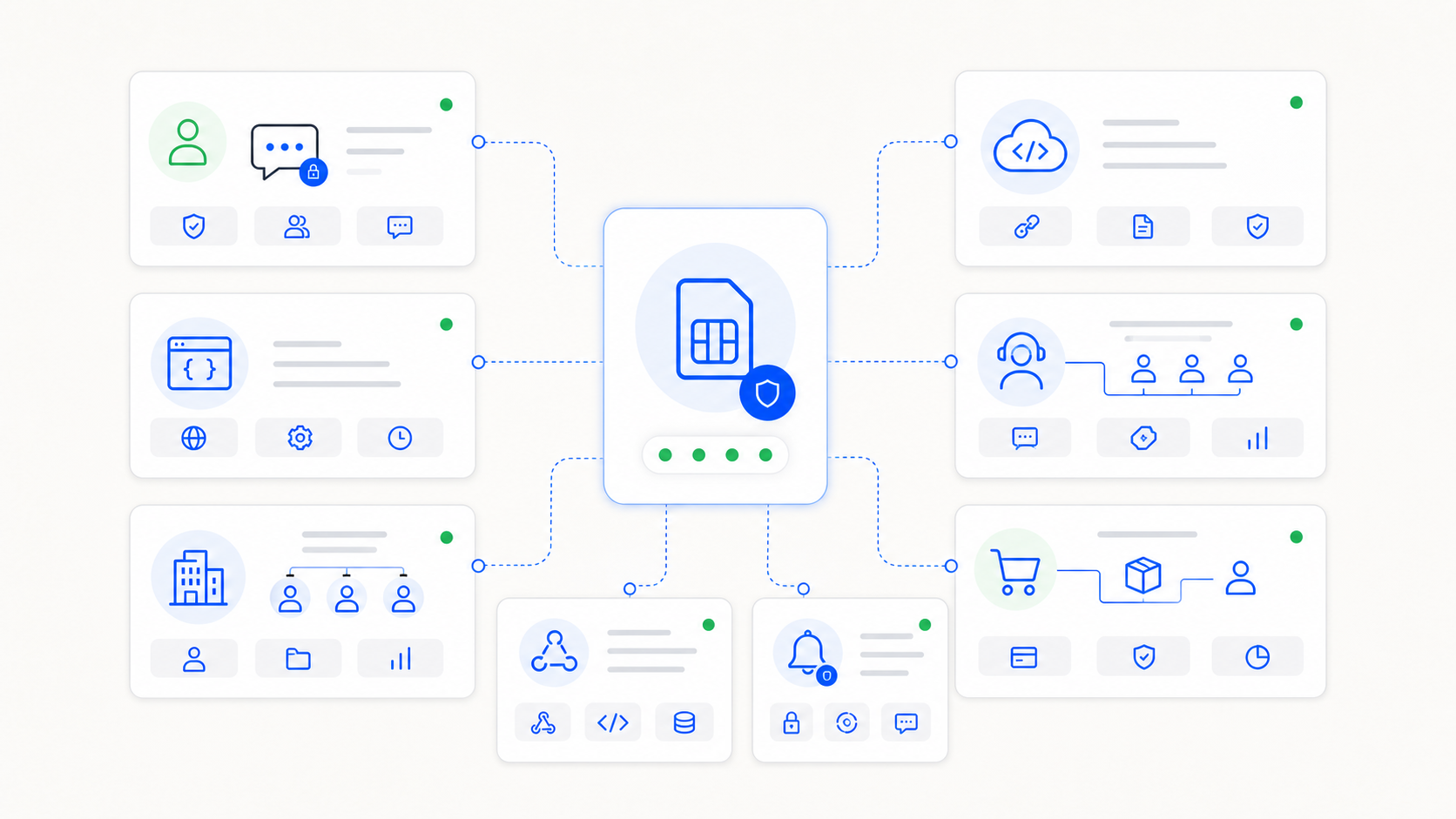
Dedicated numbers are useful where the number becomes infrastructure
Dedicated phone numbers are not useful because every agent needs a number. They are useful where the number becomes part of the workflow.
That happens when the number is used for WhatsApp identity, SMS verification, account recovery, client handoff, store messaging, QA testing, workflow automation, or operational alerts. In those cases, the number should not casually belong to a founder, employee, contractor, or public inbox.
This article is a use-case atlas for technical operators, AI automation agencies, WhatsApp consultants, QA teams, Shopify and D2C operators, and workflow builders deciding where a dedicated SIM-based number actually matters.
The strongest use cases start with WhatsApp and agents
An OpenClaw WhatsApp agent is a direct fit when the agent needs a WhatsApp identity that should not be tied to a personal number. OpenClaw’s WhatsApp docs describe the channel as using WhatsApp Web and Baileys, and recommend a separate number where possible. The Textrovault pattern is a dedicated number for the agent or workflow, with SMS receive and custody handled outside a personal phone.
A Baileys or WhatsApp Web automation has the same basic issue. Baileys is not the official WhatsApp Business API path; it interacts with WhatsApp Web behavior. That makes the attached number an operational asset. The bad workaround is using a personal number or unmanaged spare SIM. The Textrovault pattern is a dedicated managed number for risk isolation, recovery access, and custody.
WhatsApp Business API onboarding is another fit. Meta’s Cloud API phone-number setup documentation says the operator needs access to the phone number to receive the verification code, and numbers already registered with WhatsApp Messenger or the WhatsApp Business App may need deletion or migration before onboarding. The bad workaround is starting with a founder or already-used number. The Textrovault pattern is a fresh dedicated business number when the workflow is new.
Agencies, stores, QA teams, and workflows need custody
An agency client workflow often needs one number per client, brand, or workflow. The bad workaround is using the agency founder’s phone, the client founder’s phone, or a spare SIM nobody owns clearly. The Textrovault pattern is assigning a number to the client workflow and documenting recovery, access, and handoff.
A Shopify or D2C WhatsApp store can need a store-owned number rather than a founder-owned number. The bad workaround is running store messaging from a personal number that later becomes hard to transfer, recover, or separate from personal communication. The Textrovault pattern is a dedicated store or brand number.
QA and testing teams may need real SMS receiving for product flows, staging environments, and account workflows. The bad workaround is using a developer’s personal phone or public SMS inbox. The Textrovault pattern is a number assigned to the test environment or account group, with repeatable SMS receive and logs.
n8n, Make, and other automation workflows can also need a phone-number endpoint. The bad workaround is manually checking a phone whenever a workflow hits SMS. The Textrovault pattern is routing messages from an assigned number into dashboard, API, or webhook-based workflow handling.
Use-case atlas
First real use cases
| Use case | Buyer | Current bad workaround | Textrovault pattern |
|---|---|---|---|
| OpenClaw WhatsApp agent | Agent builder | Personal WhatsApp | Dedicated agent number |
| Baileys / Web automation | Automation operator | Spare SIM or founder number | Isolated experiment number |
| WhatsApp API onboarding | WhatsApp consultant | Client's messy existing number | Fresh business number |
| Agency client workflow | Agency | Employee-owned number | Per-client number |
| Shopify WhatsApp store | Merchant / agency | Founder phone | Store-owned number |
| QA/testing SMS flows | QA team | Physical phones | Test environment inbox |
| n8n / Make workflow | Automation consultant | Manual copy/paste | Webhook/API inbox |
| Account alerts / recovery | Ops team | Employee phone | Custody-controlled inbox |
OpenClaw WhatsApp agent
- Buyer
- Agent builder
- Current bad workaround
- Personal WhatsApp
- Textrovault pattern
- Dedicated agent number
Baileys / Web automation
- Buyer
- Automation operator
- Current bad workaround
- Spare SIM or founder number
- Textrovault pattern
- Isolated experiment number
WhatsApp API onboarding
- Buyer
- WhatsApp consultant
- Current bad workaround
- Client's messy existing number
- Textrovault pattern
- Fresh business number
Agency client workflow
- Buyer
- Agency
- Current bad workaround
- Employee-owned number
- Textrovault pattern
- Per-client number
Shopify WhatsApp store
- Buyer
- Merchant / agency
- Current bad workaround
- Founder phone
- Textrovault pattern
- Store-owned number
QA/testing SMS flows
- Buyer
- QA team
- Current bad workaround
- Physical phones
- Textrovault pattern
- Test environment inbox
n8n / Make workflow
- Buyer
- Automation consultant
- Current bad workaround
- Manual copy/paste
- Textrovault pattern
- Webhook/API inbox
Account alerts / recovery
- Buyer
- Ops team
- Current bad workaround
- Employee phone
- Textrovault pattern
- Custody-controlled inbox
The atlas is not saying every workflow needs a new number. It is saying that when the number becomes identity, recovery, testing, messaging, or workflow infrastructure, it should be assigned deliberately.
The first question is who or what the number belongs to. If the answer is a person but the workflow belongs to an agent, client, store, test environment, or operations process, the setup is probably wrong.
Where Textrovault fits
Textrovault provides dedicated SIM-based numbers for authorized workflows. A number can be assigned to an agent, client, brand, workflow, environment, account group, or shared operations inbox. Messages can be received through a secure dashboard and exposed through API or webhooks where needed.
Textrovault is receive-only SMS infrastructure. It is not an outbound SMS platform and it is not a public verification site. The value is a private, assigned, recoverable phone-number layer with access controls and logs.
Textrovault is for authorized workflows only: accounts, systems, clients, brands, test environments, and processes the operator owns, manages, or is explicitly allowed to operate. It is not for spam, impersonation, unauthorized access, account farming, ban evasion, or bypassing platform rules.
If one of these use cases matches your workflow, identify the number that currently carries the risk. If it should not be personal, public, unmanaged, or unsuitable for the workflow, apply for early access to Textrovault.